A University Education Offers More Than a Degree, Classicist Mary Beard Tells Graduate Class of 2026
What do you say in a commencement speech when you’ve never heard one in your five-decade academic career?
You “don’t go near ChatGPT” for ideas, said classicist Dame Mary Beard, the speaker for Georgetown’s 2026 Graduate Commencement. Beard’s academic home is Cambridge University, where there’s “no such thing” as a commencement address, she said, and that put her in an unusual situation for a graduation speaker.
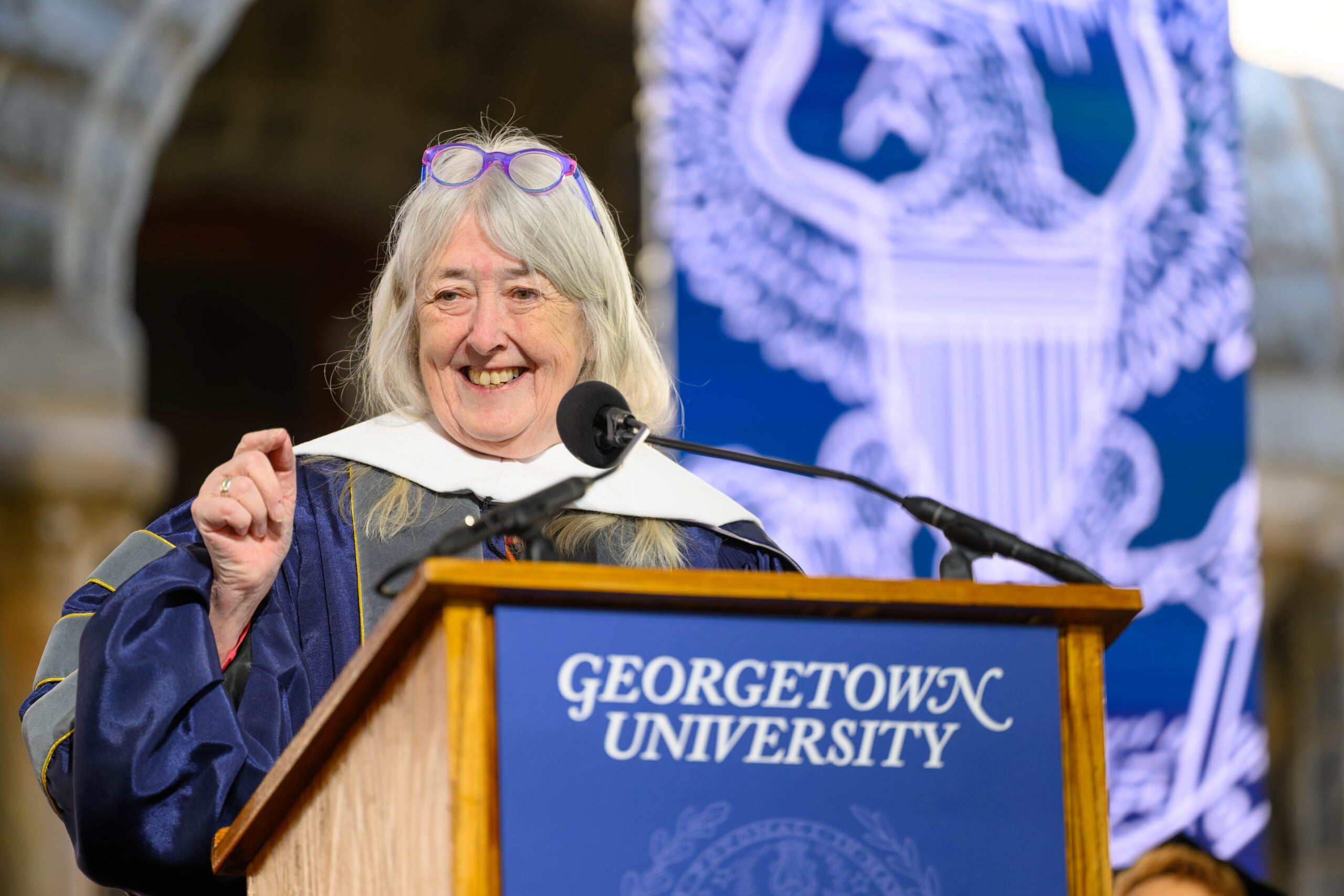
Mary Beard delivers a Commencement speech to members of the Class of 2026.
“[ChatGPT’s] first effort, when I asked it for a 15-minute address to Georgetown Graduate School of Arts & Sciences, was a patchwork of self-righteous cliches, along the lines of ‘Commencement is, of course, a beginning,’” Beard quipped to laughter. “It only got worse when I asked it for a funny address. … And it was even worse when I asked for an address in the style of Mary Beard. What that did was throw in a sprinkling of inaccurate factoids about the ancient classical world.”
When her AI-assisted foray into speechwriting failed her, Beard did what any good academic would do: peer research and her own writing.
In her speech, Beard declined to give advice to the crowd of graduate students and loved ones, saying that “history is normally on the side of the young.”
Instead, she offered the graduates new perspectives on the value of their university education and encouraged them to advocate for institutions of higher education.
“You have all been lucky enough to be at one of the best [universities] in the world,” Beard said.

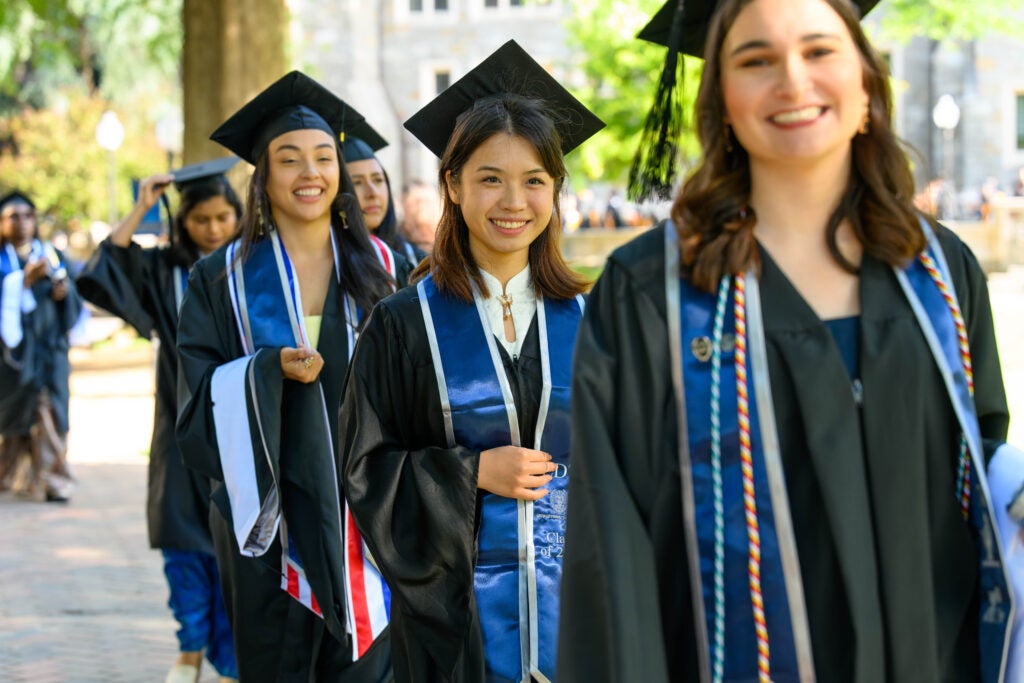
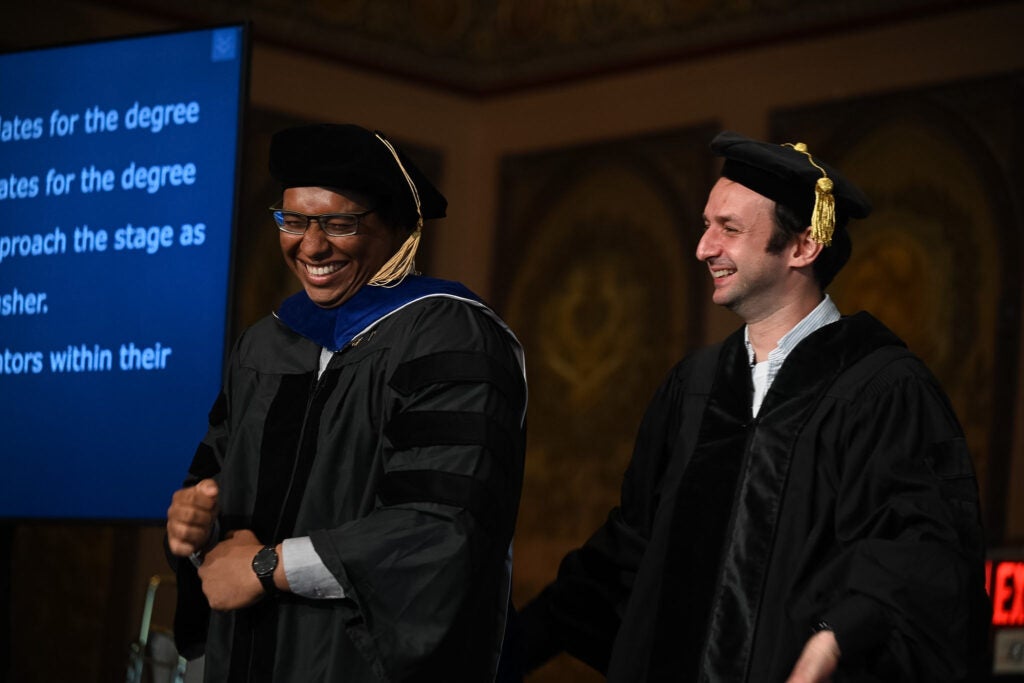

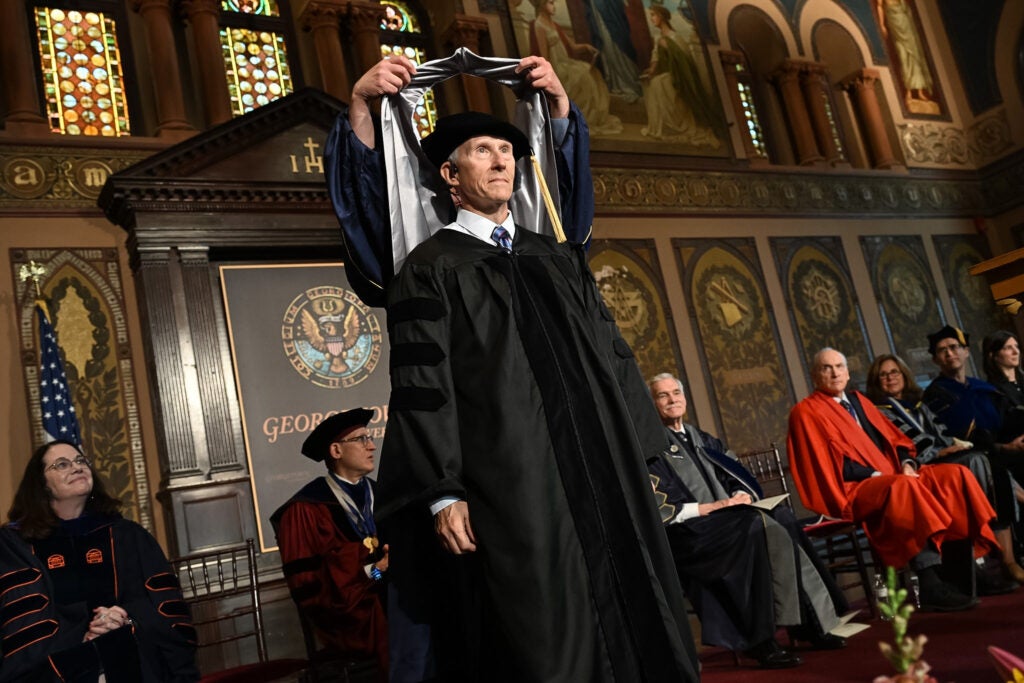
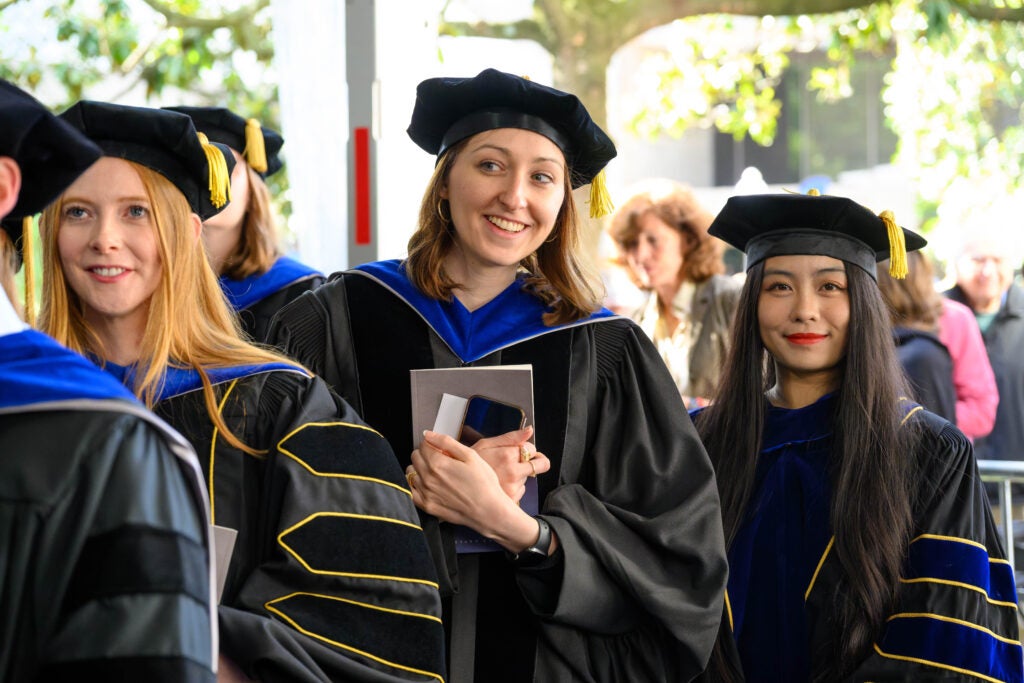
Beard: Why Universities Matter
Universities are “one of the great inventions of the modern world,” Beard said, and she’s qualified to make that assessment.
Beard has spent four decades teaching, writing and presenting extensively about art, culture and power in the Roman Empire, both within academia and the public sphere. Her work aims to make ancient history compelling and relevant to modern audiences.
With this 2,600-year-long lens, Beard offered students three reasons to appreciate universities: their roles in supporting and nurturing developing intellectuals, defending complexity and granting perspective.
When Beard was a Ph.D. student, dissertations had to be typed by professional typists before publication, she said. At the time, she couldn’t afford the equivalent of $1,500 today to hire a typist, and so her advisor loaned her the money with the request that she pay it forward.
“At their best, universities are truly supportive institutions who nurture the hopes and the aspirations of their students,” she said.
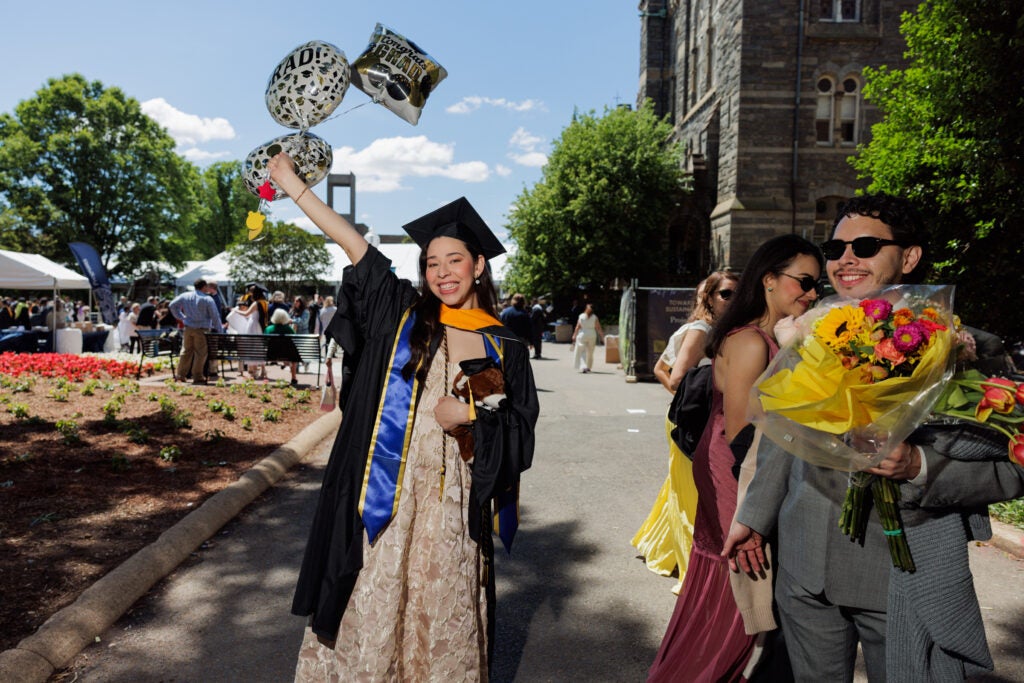
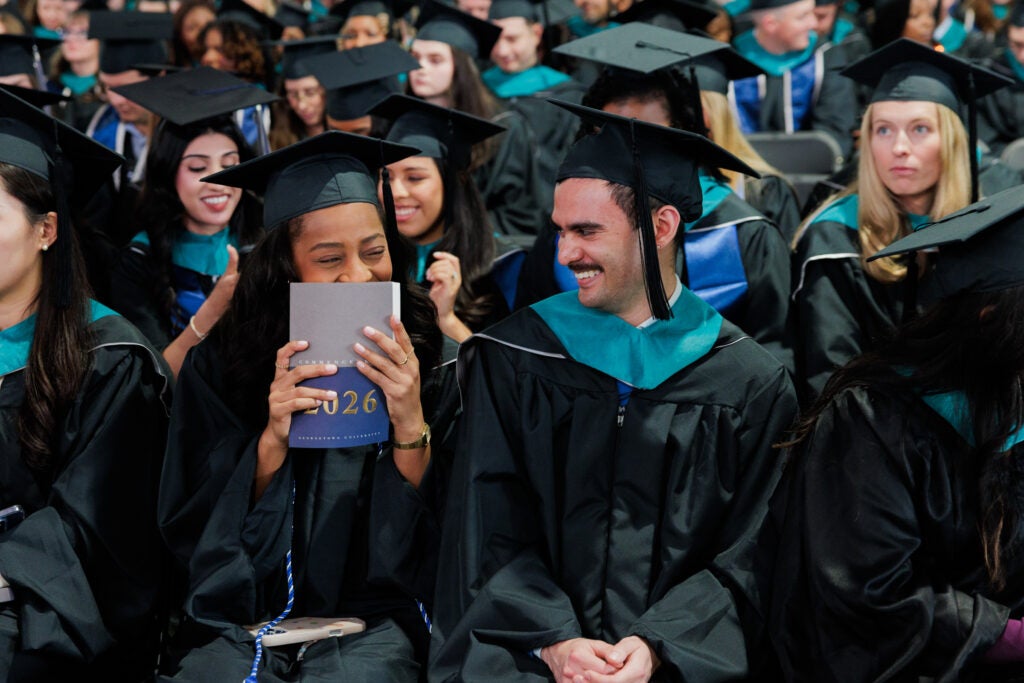
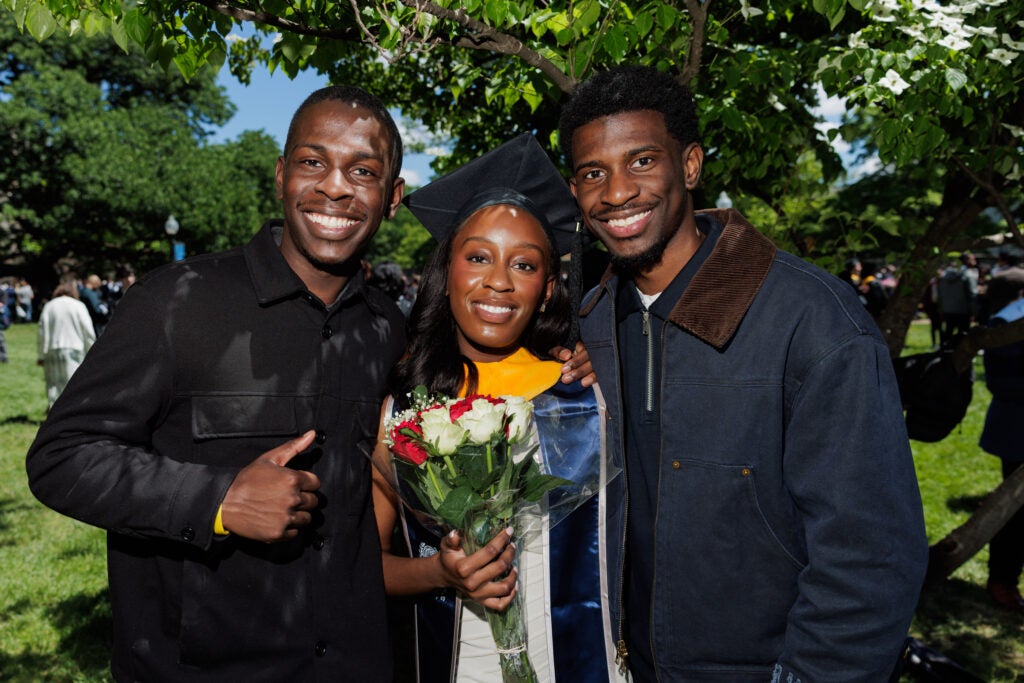
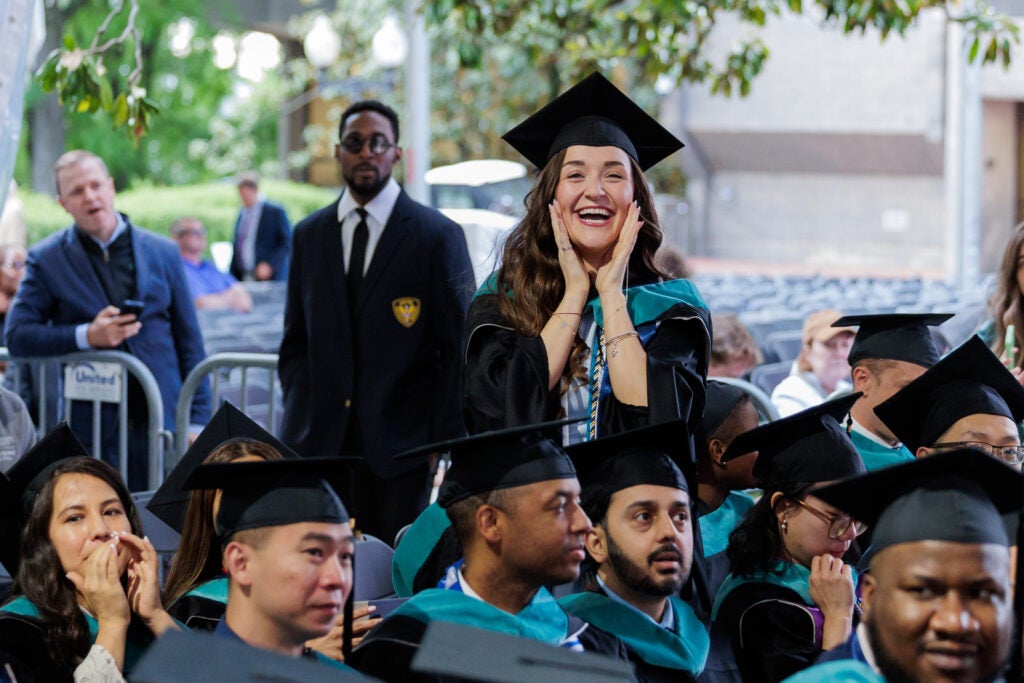
Photos in gallery by Elman Studio.
Universities are also “great defenders of complexity,” whose job it is to “make the world look constructively more complicated,” she said. It’s common for graduate students to feel that the more they learn about a subject, the less they feel they know because they realize how vast and nuanced a topic can be.
“We currently live in a world which trades on crude oversimplification, on crude rights and wrongs,” Beard said. “The university stands against that. It defends complexity, it defends difficulty and it battles against simplicity.”
She argued that universities, at their best, encourage scholars to explore distinct perspectives to understand others’ viewpoints and thereby gain a more holistic view of their discipline and world.
“My claim to you is that, whether it’s in storms on social media or in world geopolitics, we really need more people who can imagine what it might be like not to think like they do,” she said.
Beard closed her address with a bit of antiquities trivia: Inside the Washington Monument is a building block from the Parthenon in Athens, Greece, she said. Pope Pius IX gifted a block from the Roman Forum for inclusion in the monument, too, but it was stolen and dumped into the Potomac, where it has lain unrecovered for over 150 years.
Advice from the Graduates
Words of wisdom were in ample supply during Georgetown’s multi-day commencement celebrations, and not just from the experts selected as commencement speakers.
In the spirit of Beard’s encouragement for others to “take advice from the Class of 2026,” learn from a few of Georgetown’s newest master’s and Ph.D. recipients:
- “Go forward with faith, however that may look. Go forward with purpose. Go forward knowing that everything you carry within you is not by accident — it’s by design.” -Elisabeth Point Du Jour (G’26), master of science in global health
- “Use your education not only for personal success, but for collective good. Use your degree to open doors for others. Use your voice to defend truth, dignity and justice. … And as my mother used to say, remember that success is not measured only by titles or salaries. Success is measured by how many people rise because you chose to care.” –Cesar Salgado Portillo (G’25), Ph.D. in Spanish literature and cultural studies
- “Plan things out, take your time, don’t be afraid to seek out support from your friends, your team and your mentors. Don’t be afraid to get out of your comfort zone.” -Siddharth Bharani-Dharan (G’26), master of science in biochemistry & molecular biology
Commencement 2026: By the Numbers
During this year’s commencement ceremonies, 5,012 graduate students and 1,918 undergraduate students received a degree from Georgetown University.
The McDonough School of Business had the highest number of non-professional graduate degree recipients with 988, followed by the School of Continuing Studies with 854. Here’s how other schools’ postgraduate graduation numbers broke down:
- Walsh School of Foreign Service: 542
- Graduate Studies (formerly the Graduate School of Arts & Sciences): 497
- Biomedical Graduate Education: 297
- McCourt School of Public Policy: 246
- Berkley School of Nursing: 167
- School of Health: 62
- School of Medicine: 4 MD/Ph.D. and 4 MD/MBA graduates
Across undergraduate and graduate programs at Georgetown, students in the Class of 2026 represent 45 states and Washington, DC, 2 U.S. territories and 64 other countries.