Innovative Biomedical and Genetics Research Projects Net Ph.D. Students ARCS Scholar Awards
Four doctoral candidates at Georgetown University have been named ARCS Scholars for 2025-2026.
The distinction, granted by the Metropolitan Washington Chapter of the ARCS (Achievement Rewards for College Scientists) Foundation, recognizes graduate students’ valuable research contributions to the fields of science, engineering and medicine. Each award is $15,000 and can be used to supplement research costs or student stipends and tuition.
The Georgetown awardees’ research specialties range from cancer treatment to plant genetics. This year’s recipients are Ph.D. candidates Katelyn Dial (G’26), in biochemistry and molecular & cellular biology; Darrian Mills (G’26), in physics; Charli Minsavage-Davis (G’27), in biology; and M.D./Ph.D. candidate Alexander Lekan (G’26, M’28), in tumor biology.
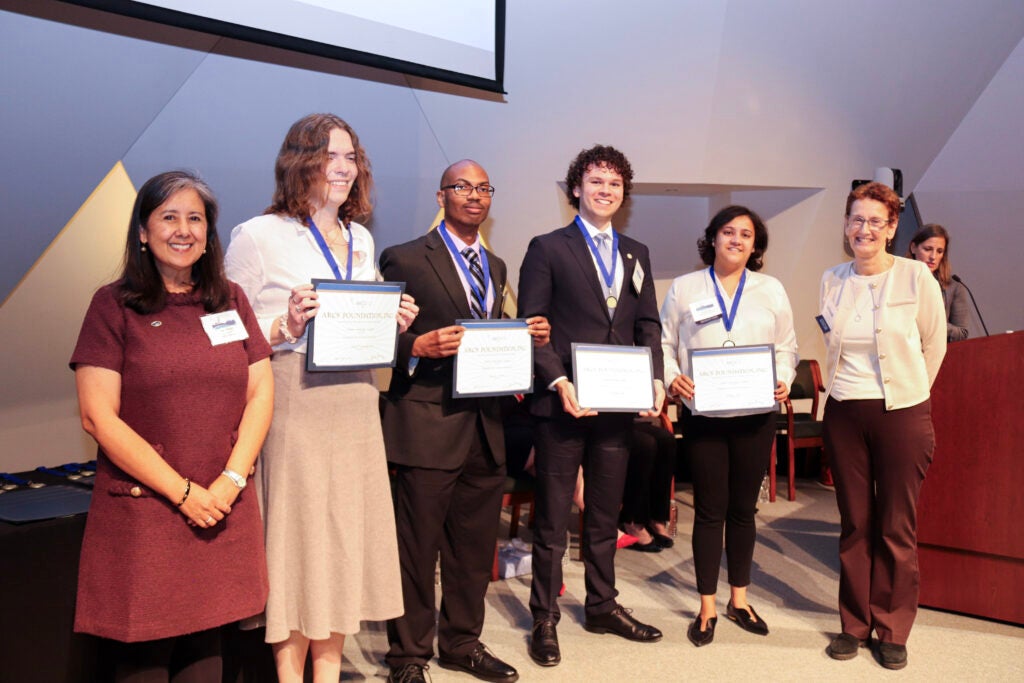
The Georgetown University winners of the 2025-2026 ARCS Scholars Awards pose with their certificates. From second from left: Charli Minsavage-Davis (G’27), Darrian Mills (G’26), Alexander Lekan (G’26, M’28) and Katelyn Dial (G’26). (Courtesy of the Metropolitan Washington Chapter of the ARCS Foundation)
“Student-led science research is the cornerstone of our research academic enterprise at Georgetown, so ARCS’ recognition of these students’ work is so important,” said Anna Riegel, Georgetown’s vice president for research and vice dean for Biomedical Graduate Education in the School of Medicine.
Get to know the awardees and their vital biomedical and biological research.
Katelyn Dial (G’26): Exploring More Effective Antidepressants
Recent research suggests that when used in controlled clinical settings, psychedelic drugs hold promise as therapies for treatment-resistant depression and may be more effective than standard antidepressant medication.
Dial, recipient of the ARCS Foundation’s Joan Jordano Scholarship, is figuring out how. By studying psychedelics’ effects on receptor serotonin 2A in the brain’s hippocampus, Dial hopes to understand these drugs’ effects on brain function at a cellular level.
Katelyn Dial
This information can help inform the development of more targeted therapies for major depressive disorder, Dial said.
“Current treatments require chronic administration and still fail a large proportion of patients, whereas psychedelics consistently show rapid, potent and durable effects,” Dial wrote. “That contrast is what makes them both scientifically compelling and clinically urgent to study.”
The ARCS award has allowed Dial to generate additional data that opens new research pathways for her and her mentor, neuroscience professor Dr. Katherine Conant.
“The financial support was truly transformative for my research,” Dial wrote. “It allowed me to invest in equipment and materials that dramatically increased the scope and throughput of my experiments.
“Beyond the practical impact, the award was incredibly motivating and made me feel seen and supported as a scientist,” she added.
Darrian Mills (G’26): Piloting A Needle- and Pill-Free Medication Method
Medications taken by mouth are metabolized by the gastrointestinal tract and liver, which can reduce the amount of the drug that reaches its target organ or body system.
In Georgetown physicist Makarand Paranjape’s lab, Mills is exploring another medication delivery method with a more direct route: the skin. Unburdened by pills or needles, microheated skin patches can administer medication in a painless and non-intrusive way, Mills said.
This method of medication delivery may also reduce side effects and health care costs for patients.
Darrian Mills
“I knew from the beginning that I was an experimentalist and wanted to do hands-on labwork,” wrote Mills, a Patrick Healy Graduate Fellow at Georgetown. “I also previously had some exposure to nanotechnology in my undergrad. When I came to Georgetown, I learned that much of Dr. Paranjape’s work involved applying nano/micro technology to create biomedical devices, and this was something I found appealing.”
The ARCS Foundation’s Chapter Scholarship arrived at a key time in Mill’s research. He will soon test the transdermal patches in clinical trials evaluating the tech’s medication delivery performance.
“It’s an honor,” Mills wrote. “I’m very appreciative of the support and opportunities [the award] will provide.”
Charli Minsavage-Davis (G’27): Using AI-Powered Genetic Sequencing to Understand Plant Propagation
Many plant species naturally reproduce by cloning, which creates genetically identical offspring from existing parts of parent vegetation.
However, genetic variation produces hardier species. Davis is pioneering the use of AI and quantitative models to study how clonality affects the genome and evolution of clonal plants, specifically focusing on an important grass for coastal ecosystems.
She aims to fully sequence the genome of Spartina patens, or saltmeadow cordgrass, for the first time. Her work supports the long-term survival of the cordgrass, which stabilizes and protects coastal shorelines along the southeastern United States.
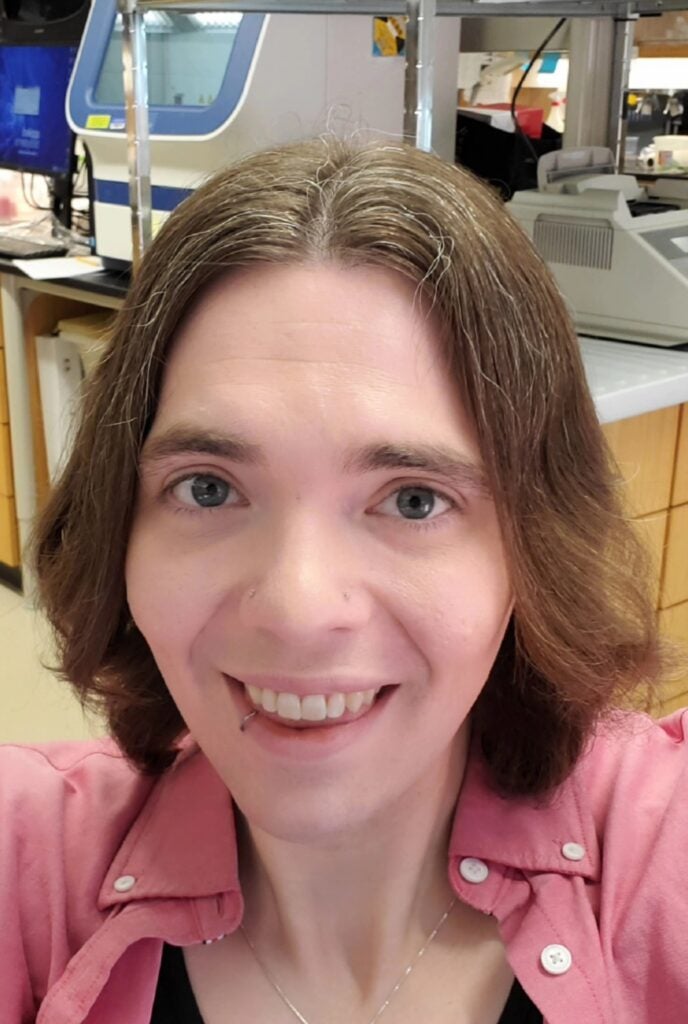
Charli Minsavage-Davis
“I have always been fascinated by the use of quantitative models to make predictions in research systems,” Davis wrote. “The application to natural populations and their management is really important to me. Furthermore, the use of AI in streamlining predictions for natural populations is super novel and promises to help researchers and managers achieve goals more readily in the future!”
With the ARCS Foundation’s Mars Foundation Scholarship and the guidance of her mentor, genetics associate professor Matthew Hamilton, Davis has prepared and sequenced additional genomic samples to develop models on the evolutionary history of clonal organisms.
“Being named an ARCS Scholar is incredibly prestigious,” Davis wrote. “I feel both honored by the confidence ARCS has in my work and even more driven to succeed in my dissertation.”
Alexander Lekan (G’26, M’28): Improving Immunotherapy for Pancreatic Cancer
Pancreatic cancer is one of the deadliest cancers in the U.S. It is difficult to treat, in part because it is often diagnosed at a late stage and is more resistant to chemotherapy than other cancers.
Immunotherapy is an emerging treatment that could improve patient outcomes with further research. Using imaging mass cytometry, Lekan analyzes how increased interactions between immune cells and tumor cells could improve immunotherapy’s effectiveness.
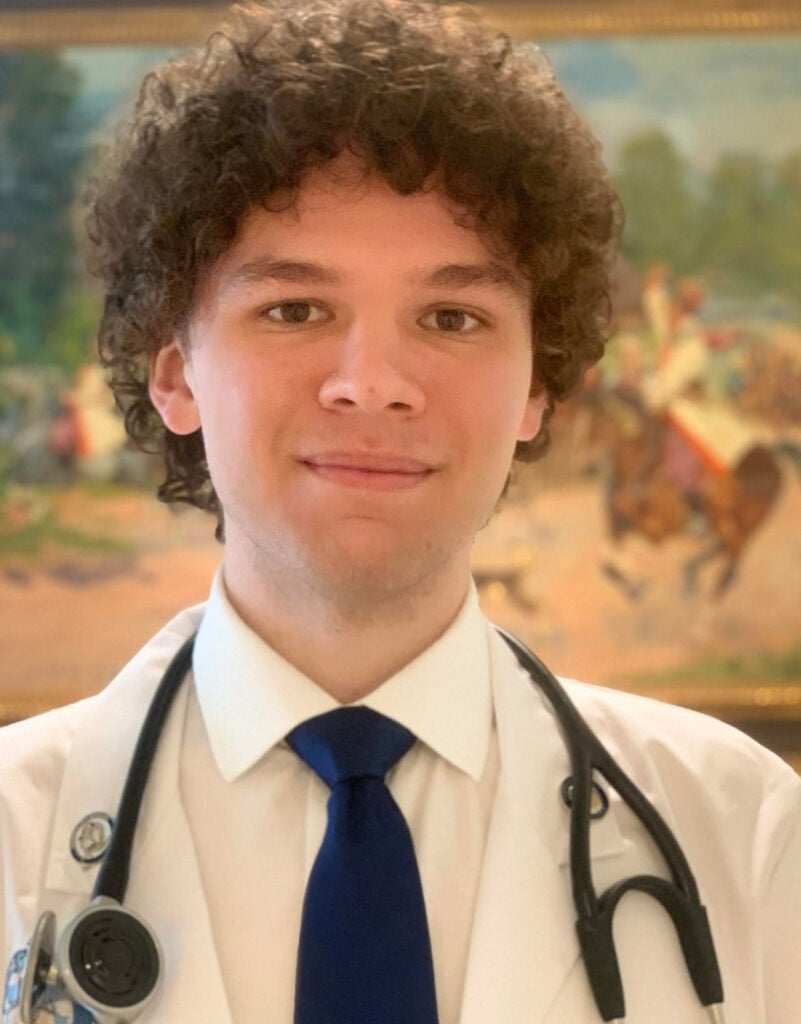
Alexander Lekan
“Pancreatic cancer is a ‘cold’ tumor, or one that is lacking in activated immune cells,” Lekan wrote. “The idea is if we can get more activated immune cells into the tumor, then immunotherapy, a type of therapy that activates the immune system to fight cancer, may potentially be more effective.”
Lekan, a returning Forster Family Foundation Scholar from 2024-2025, said the scholarship has alleviated the cost burden of experimental reagents and enabled him to explore new approaches.
Under the mentorship of oncologist Dr. Louis M. Weiner, director of Georgetown’s Lombardi Comprehensive Cancer Center, Lekan has recently found that combining mutation-targeting therapies with immunotherapy can boost immune cells’ abilities to infiltrate tumors.
“Being named a recipient of an ARCS scholar award is a tremendous honor,” Lekan wrote. “It feels incredibly validating to see my work recognized by the ARCS Foundation.”