
How I’m Finding My Career Path and Landing Dream Internships as a Grad Student
This student-contributed piece was written by Priyasha Chakravarti (C’25, G’27), a second-year Master of Public Policy candidate in the McCourt School of Public Policy who is interning at the Brookings Institution’s Governance Studies program this summer.
Growing up between India, the Philippines and now the U.S., I have always been interested in global policy and development issues. My international upbringing influenced my academic coursework, extracurricular activities and the start of my professional journey.
I have also always had a creative side and an interest in multimedia storytelling. Over time, I learned to combine these passions and developed a knack for writing about timely policy issues in research papers and memos for classes and internships and articles for campus publications.
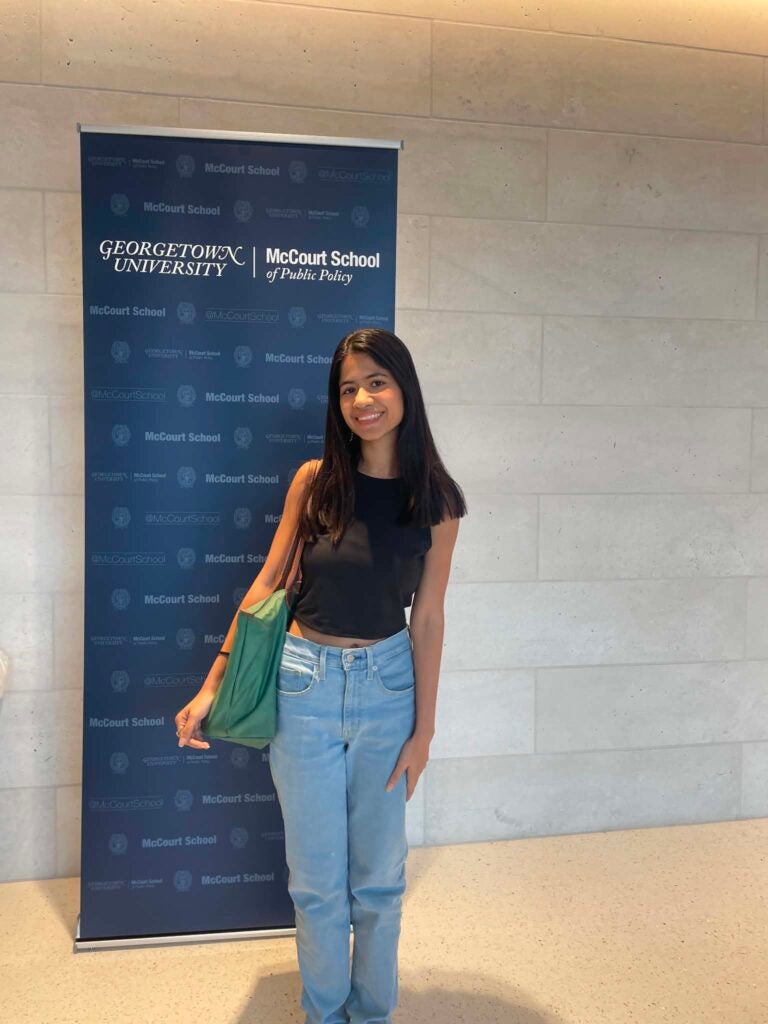
“My master’s program also equipped me with the skills, knowledge and networks to pursue dream internship opportunities that once felt out of reach,” writes Priyasha Chakravarti. (Photo courtesy of Priyasha Chakravarti)
During my time at Georgetown, I found a way to shape these dual interests into a career where I can help translate evidence-based research into accessible multimedia narratives that reach diverse audiences, spark policy change and support engagement, funding and program uptake.
Working towards my master’s in DC has opened doors for me to incredible internship opportunities at the intersection of public policy and strategic communications. This summer, I’m interning at the Brookings Institution’s Governance Studies program and building my communications experience in amplifying governance and policy research.
At Brookings, I write newsletter and social media copy, track media coverage, help run events and support broader communications strategies to disseminate policy research. The policy topics are well-aligned with my graduate school coursework at the McCourt School of Public Policy.
In many ways, this internship is a crucial stepping stone in my career journey. It took many rounds of applications, networking and a great deal of introspection and hard work to get here. I hope that by sharing my experience, I can help other graduate students find a path that holistically incorporates their interests, strengths and personal and community needs — their ikigai, “or reason for being.”
My Path
Given my interests and background, it’s probably not surprising that I chose to attend Georgetown as an undergraduate. I majored in government and minored in journalism and international development. My classes helped me build a strong theoretical foundation in global issues and sharpened my writing, editing and multimedia communications skills, including video, photo and graphic design.
When I started applying for internships in college, I was drawn to research and communications roles at nonprofits and think tanks. As I started interviewing, I saw more opportunities in communications openings that fit my interests and skills.
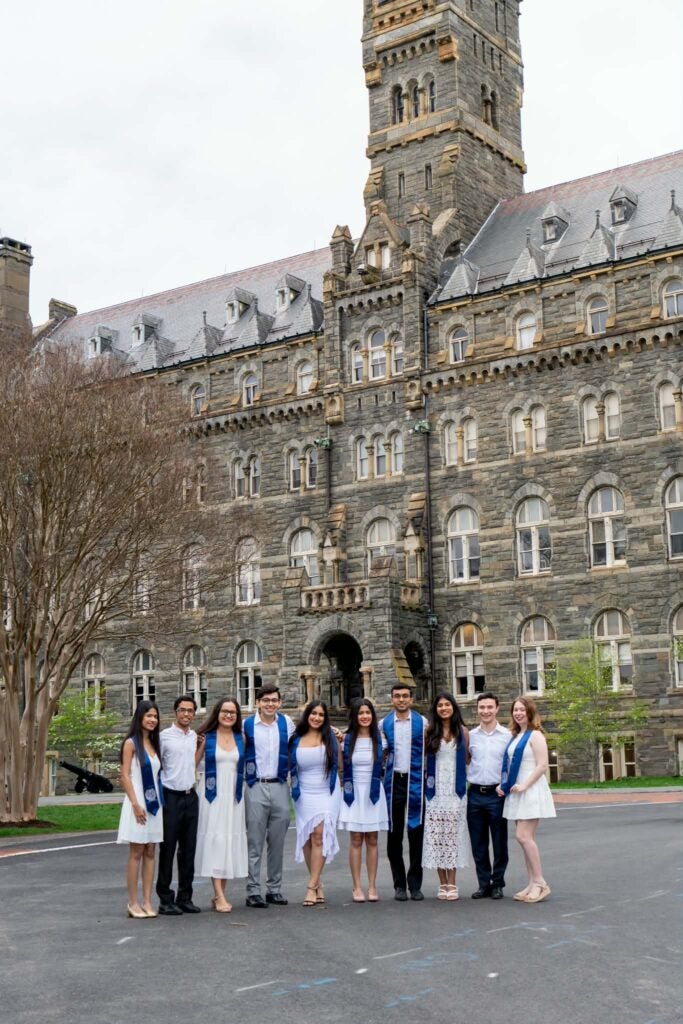
Chakravarti, far left, attended Georgetown for college, too, majoring in government and minoring in journalism and international development. (Photo courtesy of Priyasha Chakravarti)
I took on two separate 3-month internships at the National Peace Corps Association and at the U.S.-Asia Institute while earning my bachelor’s. Both are small nonprofit organizations where I strengthened and applied my writing, editing, podcasting, interviewing and social media skills. I’m particularly proud of hosting an episode of the U.S.-Asia Institute’s Asia Unscripted podcast, where I interviewed Michael Kugelman, resident senior fellow for South Asia at the Atlantic Council, about Bhutan and Gross National Happiness.
In both internships, I realized I enjoyed the strategic, creative and research-driven aspects of communications work.
I decided to pursue a Master of Public Policy right after completing my bachelor’s, primarily to gain more technical skills and better understand development and public policy issues before entering the workforce. My graduate experience is deepening my understanding of policy issues in qualitative and quantitative ways, while also strengthening my ability to translate complex findings into clear, accessible communications for broader audiences.
My master’s program also equipped me with the skills, knowledge and networks to pursue dream internship opportunities that once felt out of reach. While I had previously faced rejections from the organizations I’d come to intern with, I was now applying with a clearer sense of alignment between my skills and their needs and had professors in the policy world supporting my journey.
Hands-On Experience
During the first year of my master’s program, I was a communications intern at the Observer Research Foundation (ORF) America, a nonpartisan, nonprofit organization focused on policy challenges affecting the U.S., India and their partners.
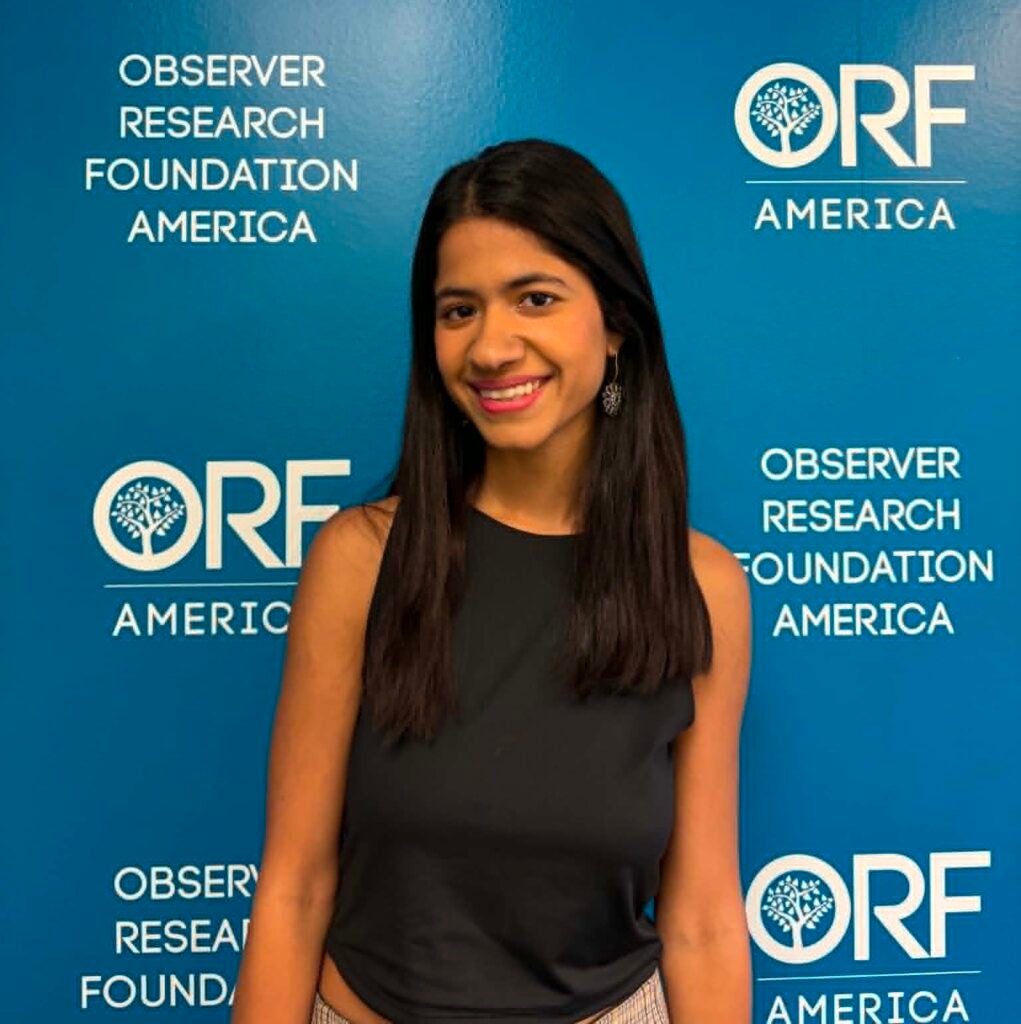
Chakravarti took on a communications internship with ORF America during the first year of her master’s program. The “‘dream internship” helped her grow her communications skills and determine her professional goals. (Photo courtesy of Priyasha Chakravarti)
With my Indian heritage, it was especially meaningful for me to work on issues connected to India’s foreign policy while helping translate policy research into accessible communications. Over eight months working with ORF’s tight-knit communications team, I helped launch their first podcast and LinkedIn newsletters and execute communications strategies that doubled their social media engagement.
Now, I’m excited to see where my experiences at the Brookings Institution, a nonpartisan policy research nonprofit, lead me this summer. Coming from a smaller think tank, it’s fascinating to see the scale and reach Brookings brings to policy communications and public engagement. I’m already learning new skills, including how to create data visualizations that accompany widely distributed reports.
Across my internships, I’ve come to see communications as the connective tissue between research, institutions and the people they ultimately aim to serve. Without a communications team, the good work being done by an organization or its fellows may not reach the right people and influence meaningful change.
I’ve also realized that I’m a better communicator when I have a solid understanding of, and passion about, the subjects of the organization’s work. Throughout my educational and professional experiences, I’m gaining the type of specialization that will benefit me throughout my career ahead.
My Advice
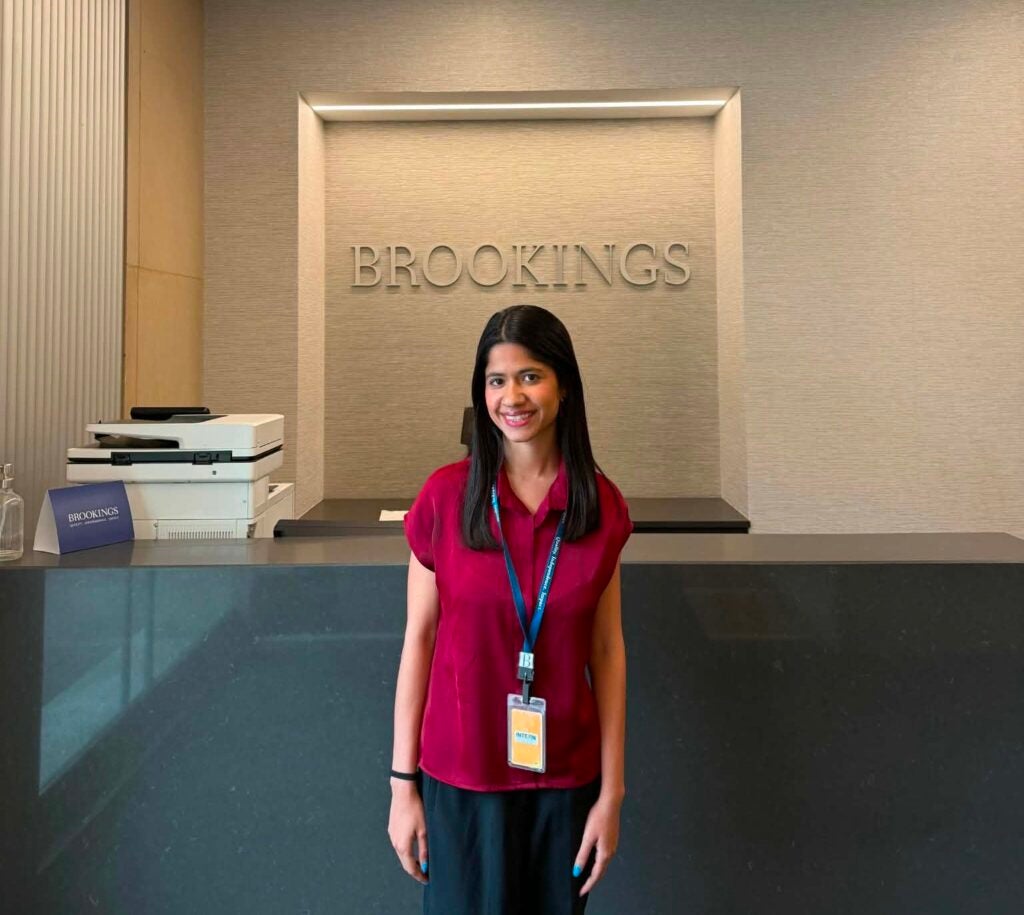
Chakravarti in the Brookings Institution’s DC office. (Photo courtesy of Priyasha Chakravarti)
My LinkedIn title or resume header cannot capture the full range of my interests and experience in a single word. I am not solely a communicator, researcher or policy analyst; rather, I am building my career at the intersection of these fields, translating ideas into narratives that inform, engage and create impact.
I don’t believe that students have to sacrifice one interest for another as we find our professional paths, especially so early in our careers. Instead, we can find ways to merge our interests for a more fulfilling life.
While I certainly do not have it all figured out, here are a few tips I’d give students balancing dual interests:
- Lean into your strengths
- Develop a variety of skills and apply them in different contexts
- Learn from those with a career trajectory similar to the one you seek
- Position your dual interests strategically to potential employers, showing how they work together to give you unique insight
- Let your interests evolve together instead of forcing a choice too early
- Build expertise and deepen your knowledge in addition to tangible skills
At the end of the day, you know your interests, strengths and goals better than anyone else. You don’t need to have it all figured out to move forward with purpose on your professional and personal journey.