Georgetown Has Left Me Better Than It Found Me, And I’m Carrying Its Lessons Forward
This student-contributed piece was written by Farrell Moskow (G’26), who graduates this month with his master’s in applied intelligence from the School of Continuing Studies (SCS).
Moskow pursued his master’s degree while continuing to work in an intelligence and analytical role in the federal government. He found that concepts he learned in class were directly applicable to his responsibilities in the workplace, even within a day of learning them. Moskow finished his master’s curriculum in December 2025.
He is a recipient of the school’s 2026 Tropaia Awards, which recognize outstanding students, faculty, staff and alumni who embody the spirit and excellence of the SCS community.
For me, earning a graduate degree was never about checking a credential.
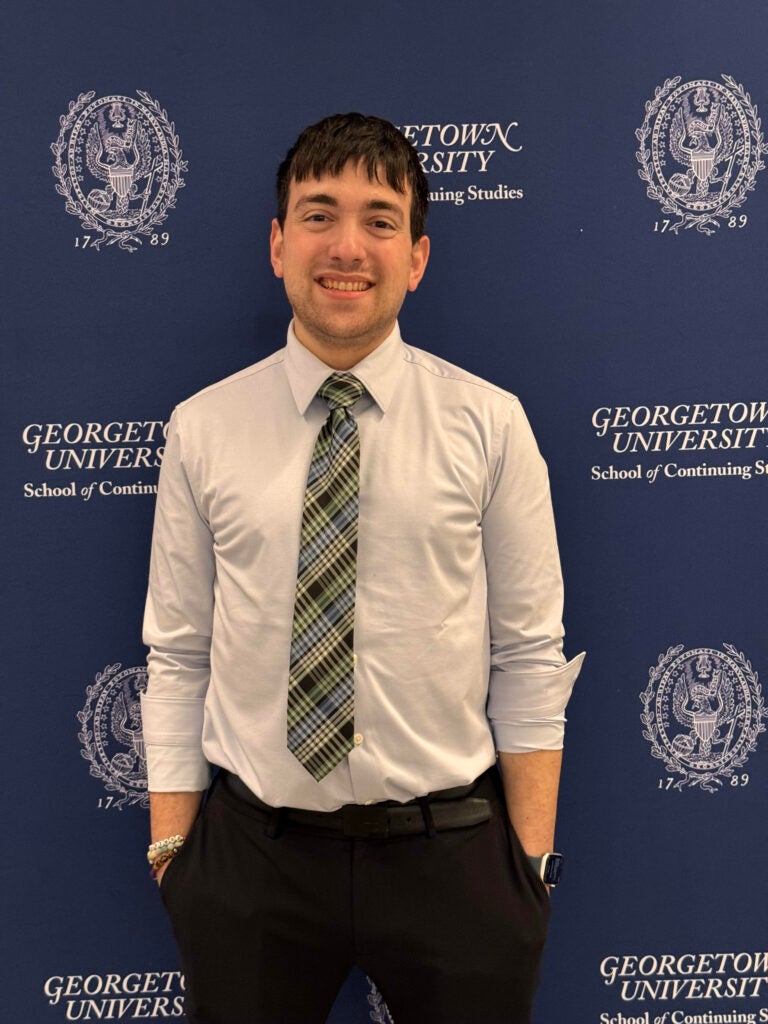
Farrell Moskow (G’26). (Courtesy of Farrell Moskow)
It was about intentional growth, standing out through preparation and perseverance and pursuing something that no one in my family had accomplished before, while carrying that responsibility forward.
Looking back on my time at Georgetown, I can say with certainty that the university has left me better than it found me. And that growth was no accident. It was the result of intentional decisions, meaningful challenges and the people who pushed me to become better.
Earning my master’s has refined how I analyze, communicate, make decisions and serve others. The lessons I learned did not wait until Commencement to matter. They are already embedded in the way I approach my work, my leadership and my commitments as a federal employee.
I chose to attend Georgetown because my program, the Master of Professional Studies in Applied Intelligence, aligned with my goals and interests. I sought a program that would challenge me intellectually, supplement my current professional role and strengthen my future. What I did not anticipate was how immediately it would begin shaping me and my work.
Proven Relevance Within 24 Hours
From my first semester, I could tell that what I was learning mattered. My program’s coursework is demanding, yet grounded. Our faculty are practitioners who understand the field in both theory and practice and care about their students’ learning.
I remember a particularly tough block in my Psychology of Applied Intelligence course when we were learning about structured analytical techniques. The frameworks were rigorous, with precise terminology, and much of the subject matter centered on areas outside my daily responsibilities.
I felt completely out of my element. But I stayed after class, arrived early and asked questions. I worked through exercises with classmates until the material began to click. Still, I kept wondering, “When will I actually use this?”
During my master’s studies, I completed a joint duty assignment within the federal government. The day after I started to feel confident in my analytical coursework, I was called into a professional training session at work where the instructor’s focus was familiar: structured analytical techniques.
Earning my master’s has refined how I analyze, communicate, make decisions and serve others. The lessons I learned did not wait until Commencement to matter. They are already embedded in the way I approach my work, my leadership and my commitments as a federal employee.
Farrell Moskow (G’26)
Less than 24 hours earlier, I had been learning these concepts in a Georgetown classroom. Now, my colleagues and I were learning how to apply them to inform national security decisions.
Because of Georgetown, I understood the material and was able to contribute to the discussion. When I returned to class, I brought this real-world example back to my professors and classmates.
For me, that moment clarified something important. This degree was not theoretical preparation for a future chapter, but shaping how I worked in real time.
Lessons in Leadership
Beyond technical application, Georgetown has transformed how I think about leadership.
In my professional capacity, I have led national-level training initiatives, mentored colleagues and worked to improve intelligence dissemination processes. In these environments, clarity, structure and responsible decision-making are essential.
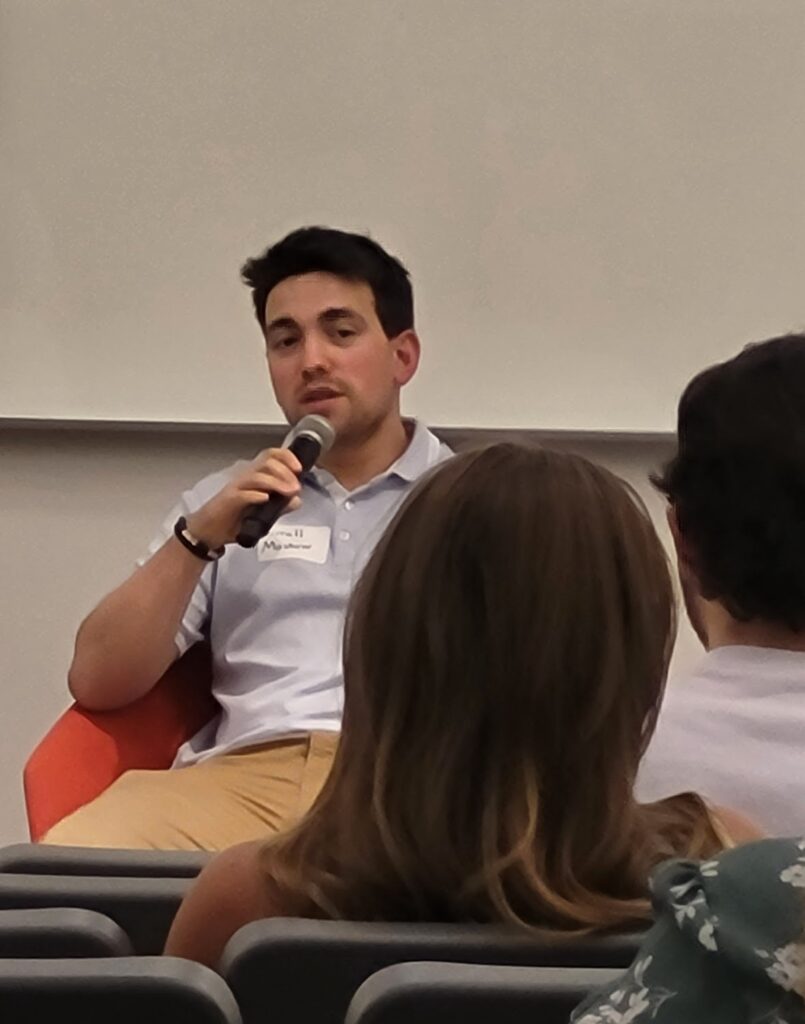
During his Georgetown graduate program, Farrell Moskow shared insight from his master’s experience with prospective and current Hoyas through panels and individual outreach. (Photo courtesy of Farrell Moskow)
My master’s program valued these same skills and helped me refine them. In classes such as Applied Intelligence Communications and Advanced Analytical Techniques, I learned how to structure complex analysis, visualize data to highlight meaningful patterns, communicate insights clearly to decision-makers and confidently make decisions on behalf of a team.
During the capstone simulation, I applied these frameworks in a realistic scenario that tested my analytic performance and reinforced my responsibility to elevate those around me.
I took on a leadership role in organizing my team’s complex, time-sensitive intelligence analysis and delivering our final briefing. I had to navigate differing perspectives, make decisions under pressure and ensure our work was cohesive. That experience pushed me outside of my comfort zone and challenged me to trust my judgment, ultimately strengthening my confidence as a leader and my sense of responsibility to those who rely on me.
A Stronger, More Thoughtful Me
Since the moment I set foot at Georgetown, I have taken the university’s culture of service to others to heart and tried to contribute meaningfully.
With the encouragement of faculty and program leadership, I have gladly shared insight from my master’s experience to motivate prospective and current Hoyas through the transition to graduate school. I even served as a panelist at a School of Continuing Studies admitted student event.
Georgetown brings together the academic and professional communities so effectively, and I’m proud to have helped connect students to career-building opportunities in the federal government, too. Outside the classroom, I helped organize and support public service career presentations and intelligence community-focused events like the Georgetown Intelligence Studies Consortium.

Master’s students at Georgetown’s Graduate Commencement.
As I await my turn to walk across the Commencement stage, it amazes me how seamlessly my master’s education has integrated into my daily responsibilities and outlook.
My newfound knowledge traveled with me from the classroom to work and back again, sharpening my judgment, strengthening my technical skills and deepening my sense of responsibility and community.
There is a line from Charles Dickens that resonates deeply with me: “It is a far, far better thing that I do, than I have ever done.”
To me, that line reflects the idea that growth often comes from stepping into challenges that push us beyond what we once thought possible. My time at Georgetown has helped shape a stronger, more thoughtful version of the person and professional I strive to become, one grounded in service, responsibility and leadership.
Once a Hoya, always a Hoya. And long before the diploma is in hand, Georgetown has already become part of how I carry myself forward.
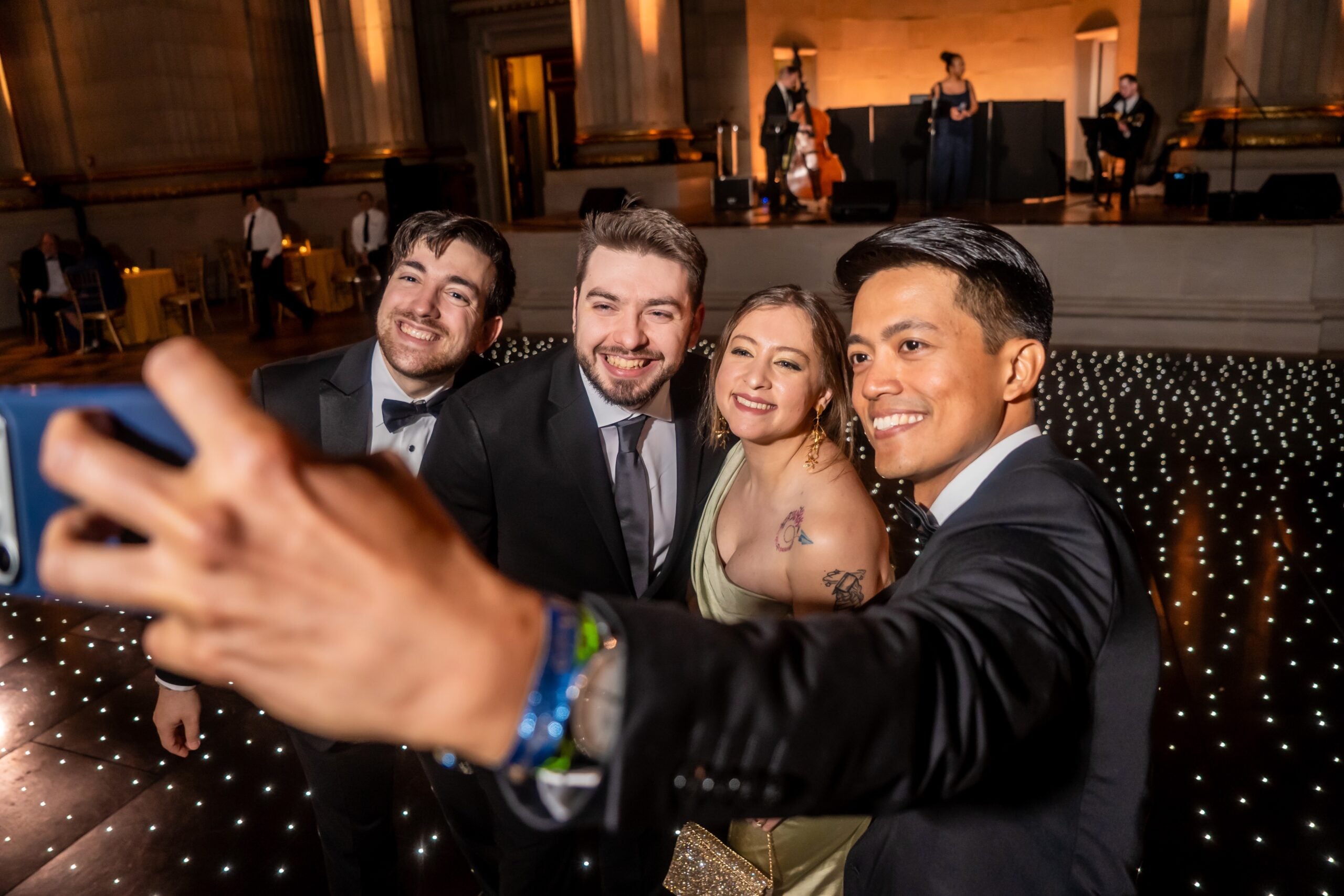
(Lead image: Farrell Moskow, far left, poses for a group photo at GradGov’s 2026 Grad Gala. Photo courtesy of Art Trends LLC)